 Українська
 English
 Español
 Français
 Bosanski
 العربية
Fund In Real Life Idaho
Fund IRL Idaho is a campaign that ensures that any payouts from current social media lawsuits help fund programs and services that promote youth well-being and healthy development.
Background
On August 26, 2026, Idaho joined a historic $17.1 billion multistate settlement with Meta Platforms Inc., one of the largest consumer protection settlements in U.S. history. Through the agreement, Idaho will receive between $89.2 million and $127.7 million over the next 10 years.
What is "In real life"
“In real life” (IRL) opportunities are ones where young people build skills, make friends, and grow. IRL is a powerful antidote to the harms of digital media.
The Idaho Out-of-School Network is the state affiliate for Fund IRL Idaho, which is part of Fund IRL National. Fund IRL works to ensure that social media settlement funds from current technology lawsuits can support high-quality out-of-school time (OST) programs. These programs provide meaningful, in-real-life activities and opportunities that promote youth mental health, well-being, connection, and healthy development.
What this means
Social media settlement funding could represent a significant opportunity to invest in what young people need most.
History shows settlement funds do not automatically reach youth-serving programs without intentional planning.
Fund IRL is working to ensure these resources are directed with clear guardrails, transparency, and accountability so that they reach those most impacted by the harms of social media – young people – and are prioritized to support their well-being.
Why this matters
Young people are seeking real-world connection, belonging, and engaging experiences. Afterschool, summer, service, mentoring, outdoors, sports, arts, and mental health programs provide the kinds of environments where young people can grow and experience joy. In these spaces, they build relationships, develop skills, and feel confident and supported as they find their footing in the world.
Idaho’s settlement funds could be invested in programs and services that provide real-world connection, mentorship, and opportunity to support youth well-being.
Resources and News
- Idaho Teens Host an In Real Life Event! $250 stipends available. See form for details
- Fund IRL Promotional Kit
- Research Brief: Helping Young People Thrive In Real Life and Online
- Helping Young People Thrive - Op-ed by Anna Almerico
- AG Labrador Delivers Largest Big Tech Settlement in History for Child Protection Against Facebook, Instagram
- Settlement Language and Payment Purpose on pages 38-39
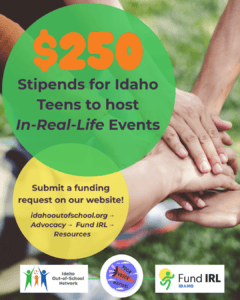
Stipends available for teen IRL events! Request Form.
Idaho Specific Messages
Use when speaking or writing about the impacts of OST and Fund IRL Idaho:
Youth Mental Health
Out-of-school programs support youth mental health by creating opportunities for in-real-life connection and building positive relationships. Young people thrive when they have consistent access to peers, mentors, and engaging environments where they feel they belong. Out-of-school programs are experts at working with local mental health providers and community partners to bring services to meet where kids and families are at.
Parent & Family Support
Out-of-school programs are essential for Idaho’s working families. They provide a safe, supervised environment for young people while parents are at work, help reduce risky behaviors after 3pm, and give families peace of mind.
Friday Programming
For Idaho families, Friday programming fills a critical gap. More than 70% of Idaho school districts run a four-day school week. Out-of-school programs provide reliable learning, enrichment, and care on Fridays when many parents are still working.
STEM Learning & Workforce Development:
Out-of-school programs help young people discover STEM skills and career pathways. Through hands-on experiences in science, technology, engineering, and math, youth build curiosity, confidence, and skills that prepare them for future careers and strengthen Idaho’s workforce.
Access & Unmet Demand
Too many Idaho youth lack access to out-of-school programs; for every Idaho child in an afterschool program, 5 more are waiting for a spot. The largest barriers are transportation, cost, and availability.
Opportunity to Invest in Youth Well-Being
Idaho’s social media settlements could fund out-of-school programs and youth mental health services that support healthy development and build skills and relationships away from screens.
The Need
After-school, summer, and other youth development programs—activities proven to keep kids safe and promote connection and well-being—are stretched thin in Idaho. For every child in an afterschool program, 5 more are waiting for a spot. At the same time, community- and school-based mental health services are in high demand and require deeper investment to ensure all young people can access the services they need.
The Solution
Social media lawsuits could yield once-in-a-generation funding for programs and services that research shows improve youth well-being and prevent harm. With this type of funding windfall, Idaho communities could expand their after-school and summer programs; mentoring and mental health services; arts, outdoor, and sports experiences; library enrichment; service opportunities; and other programs. And more young people could access the real life experiences they need to thrive.
The Opportunity
Across the country, states, communities, school districts, and families are suing social media companies for knowingly designing their platforms to keep young people hooked—prioritizing profits even as evidence mounted that these designs were harming youth mental health and safety. Like earlier lawsuits against tobacco and opioid companies, these cases could lead to major settlements or other payouts meant to repair harm and invest in solutions for young people.
The Action
We’re working toward a future where every young person has access to these programs and services—where money intended to address social media harms is invested directly in opportunities that help kids feel supported, confident, and connected. Simply taking phones away isn’t enough; it’s about giving young people more ways to grow, explore, and thrive. Together, we can turn social media accountability into meaningful investments in youth.
